2026 COCA Annual Conference theme is “Addiction in Plain Sight: Addressing Everyday Risks.” Cost – $65.
NEW THIS YEAR: Virtual Option including keynote and one workshop. Cost – $30
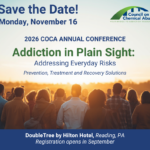
Every year, the Council on Chemical Abuse provides a conference that offers current training for Berks County professionals on topics related to prevention, treatment and recovery of substance use disorder. Hundreds of individuals gather each to hear from experts in the field. This year’s conference will focus on “Addiction in Plain Sight: Addressing Everyday Risks,” with workshops related to gambling disorder, nicotine, unregulated substances and more. Scroll down for agenda, workshop details and presenters.
Click here to email Yvonne Stroman today. You can also call
(610) 750-7550
Please note: All are included in in-person registration; those marked with a V are also included in virtual registration.
7:30 – 8:15 AM – Registration and light breakfast
8:15 – 8:30 AM – Welcome and opening remarks – V
8:30 – 9:20 AM – Keynote Presentation – V
9:30 – 10:30 AM – Panel Presentation
10:45 AM – 12 PM – Workshop A – V
12:00 – 1:15 PM – Lunch and Awards Presentation
1:20 – 2:35 PM – Workshop B
2:45 – 4:00 PM – Workshop C
4:00 PM – Evaluation link available
Conference Certificate info: All in-person attendees will receive a certificate of attendance, which will meet the requirements for six training hours. All virtual attendees will receive a certificate for three training hours. You must fill out the evaluation link after the conference in order to receive a certificate.
The World Through Gambling Colored Glasses
Over the past decade, gambling has become prevalent “in plain sight.” Accessibility to new and growing options means we are often viewing the world through “gambling-colored glasses.” Sports betting, online gambling and gaming, casinos, lottery, PA skill games and prediction markets, account for just a portion of the gambling activities that now exist in Pennsylvania. Due to this growth in opportunities, understanding potential risks and warning signs of problem gambling has become essential for helping professionals. When and how does something we are exposed to on a daily basis shift from entertainment to high-risk and problematic?
In this session, we will discuss what gambling is, how it can develop into a problem, and the negative impact of problem gambling on individuals, families and communities.
About Gregory A. Krausz
Greg is currently the Director of Training and Education for the Council on Compulsive Gambling of Pennsylvania. Greg is a Licensed Professional Counselor, Certified Advanced Alcohol and Drug Counselor (with a certificate of competency in problem gambling endorsement), a Pennsylvania Master Addiction Counselor and Pennsylvania Endorsed Clinical Supervisor. Greg is also the Owner of Monocacy Counseling Associates. He is a graduate of Moravian Theological Seminary with a master’s degree in Pastoral Counseling. He has been a case manager, counselor, clinical supervisor, and program director in the addiction, gambling, and mental health counseling field for the past 31 years. He was awarded the 2016 Bishop Kortz award for excellence in the field of Pastoral Counseling from Moravian Theological Seminary.
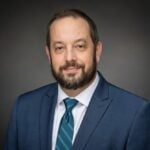
Presented by: Rebekah Sedlock
Telehealth has transformed the delivery of behavioral health and substance use disorder treatment by increasing access to care, reducing barriers related to transportation and geography, and offering greater flexibility for individuals seeking recovery support. As virtual services become a permanent part of the continuum of care, providers must balance the benefits of technology with their ethical and legal responsibilities to protect client privacy and confidentiality.
This interactive workshop explores evidence supporting telehealth as an effective treatment modality, highlights best practices for engaging clients in virtual settings, and examines common confidentiality challenges, including privacy in home environments, informed consent, technology security, documentation, and compliance with HIPAA and 42 CFR Part 2. Participants will leave with practical strategies to enhance therapeutic relationships, maintain ethical standards, and confidently deliver secure, person-centered care through telehealth.
Presented by Gregory A. Krausz
Gambling occurs within a continuum. Understanding how prevalent gambling is in Pennsylvania, and around the world, leads to the question, “How do we determine when gambling crosses from entertainment into the realm of risks and problems?”
In order to have 20/20 vision into the impacts of gambling on individuals, families and communities, we must determine how to make conversations about gambling risks and problems as common as gambling opportunities. Across helping professions, understanding how to talk about gambling, screen for risks and problems, and provide effective treatment is essential in today’s active gambling culture.
.
Presented by: Health Promotion Council
While many individuals successfully address alcohol or other drug use, nicotine dependence often remains untreated, despite its significant impact on long-term recovery, physical health, and overall well-being. This workshop explores the complex relationship between nicotine use and recovery from substance use disorders, examining current research on how tobacco and nicotine addiction can influence cravings, stress management, treatment engagement, and relapse risk. Participants will gain a better understanding of the neurobiology of nicotine addiction, the myths surrounding tobacco use during recovery, and the benefits of integrating tobacco cessation into recovery-oriented systems of care. Practical evidence-informed strategies will be shared to help prevention professionals, treatment providers, recovery support specialists, and healthcare professionals address nicotine use in a compassionate, person-centered manner while supporting individuals in achieving healthier, more sustainable recovery outcomes.
Presented by: David Fialko
The growing availability of unregulated psychoactive products sold in gas stations, convenience stores, smoke shops, and online marketplaces presents an emerging challenge for public health and behavioral healthcare systems. Products containing substances such as tianeptine, high-potency kratom, hemp-derived intoxicants, nitrous oxide, and other novel compounds are often marketed as legal, safe, or natural alternatives, despite their potential for misuse, dependence, overdose, and other adverse health effects.
This workshop will examine current trends in the availability and use of these products, explore their impact on youth and adult populations, and discuss the evolving regulatory landscape. Participants will learn how prevention professionals, clinicians, coalition leaders, and funding administrators can strengthen community awareness, identify emerging risks, implement evidence-informed prevention strategies, and collaborate across sectors to reduce harm and improve public health outcomes.
Moderator: Dr. Ramona Roberts, CCTP-II, CET, CCS, Sr. Executive Director Regional Outpatient Services, Caron Treatment Centers
Gambling Use Disorder can be difficult to recognize because gambling is often viewed as entertainment rather than a potential addiction. This panel of individuals with lived experience, will share their realities of gambling addiction and its impact on individuals, relationships, finances, mental wellness, and communities. Participants will leave with a greater understanding of why gambling addiction can remain hidden—and what we can do to bring it out of plain sight and into the conversation.
Panelists TBA
Please note: The deadline for nominations has passed. Winners will be announced at the conference.
The 2026 COCA Annual Conference Awards will recognize individuals and/or organizations who have exemplified the highest standards in the areas of addiction prevention, intervention, treatment and recovery services. We encourage you to nominate someone for one of the awards listed below:
Roger S. Hertz Education Award: For the ongoing commitment to the development and/or provision of substance use prevention programs, activities, or projects in a school setting. Eligible nominees are teachers, schools, school districts, colleges or any personnel working in a school-based setting that promotes substance use and misuse awareness and education to students and their parents.
The Joseph “Bud” Haines Community Award: For the ongoing commitment to the prevention of substance use and abuse in the community. Individuals, organizations and/or community groups eligible for this award include prevention specialists, human service professionals, volunteer organizations and/or groups working directly in the community to promote resiliency to substance use issues and their related problems.
Francis “Fran” Drexler Public Safety Award: For the ongoing commitment to provide public safety related services in the community by helping to prevent, combat and intervene on substance abuse related problems. Eligible nominees are police officers, police departments, first responders, criminal justice or any personnel working in the public safety setting to help to alleviate the effects of substance abuse in the community.
Betty J. McDonough Treatment Award:
This award is presented for the ongoing commitment to the treatment of substance use disorder. Individuals, groups and/or organizations eligible for this award include; therapists/counselors, treatment facilities, case management workers, etc.
Algot “Al” Ecstrom Recovery Award: For individuals, groups and/or organizations who demonstrate the ongoing commitment to recovery from substance use disorder. Eligible nominees include recovery support specialists, recovery housing services, and organizations that support and encourage people in recovery.
The George J. Vogel, Jr. President’s Award: In recognition of the recipient’s ongoing commitment and leadership in the promotion and advocacy of substance use prevention, intervention, treatment, and recovery support services in the community.
Click here to email Yvonne Stroman today. You can also call
(610) 750-7550